

The Making of an Elite Recruit, Class of 2026
5/13 CGC Staff
We continue our yearly tradition by bringing you the stories of many of the top-10 signees of the class of 2026, how they progressed their games through the junior golf rankings, and what led them to become top recruits. This year, twelve different athletes discuss their journey to college golf and give the golf world insight into what it takes to become a successful and consistent junior golfer.
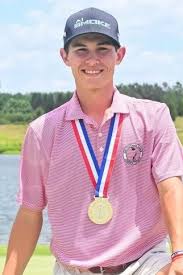
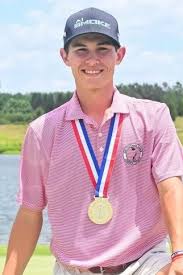


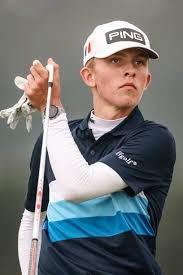
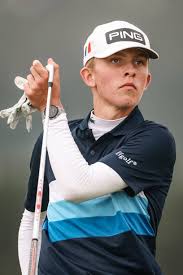
Bailey Sutter, Tyler Mawhinnney (Photos: WAGR.com)
The age that each athlete begins their golf journey varies, but four were introduced to golf by the age of three and haven’t turned back since. Alabama signee Bailey Sutter was interested in plastic clubs at the age of one and a half, and his father took him to the course with him from that age on. Also finding the love for plastic clubs was Vanderbilt bound Tyler Mawhinney, whose mom found a set at Walmart and Tyler couldn’t put them down. 2025 US Junior champion Hamilton Coleman states ‘I got interested in golf before I could even walk. My dad had me swinging the plastic clubs and I haven’t been able to put them down since.’ France’s Oscar Couilleau started playing golf around the age of three, following along with his whole family who played. Future Virginia Cavalier Hugo Le Goff began his golf journey by chance, as he was too young to ski on family ski trips. While the family skiied, his mother too him mini-golfing, and he decided from a young age that he wanted golf in his future. Many athletes were introduced to the game by their fathers, including Zoe Cusack, whose father played golf in college and started bringing Zoe to the driving range at age five. Future South Carolina Gamecock Amellia Harris lived across the street from a golf course, and her dad started letting her tag along and practice when she was five years old. Stanford signee Jude Lee’s father started taking her to the driving range at the age of seven, and she was hooked trying to hit red bucket targets on the range, with the promise of ice cream from her coach when she connected with one. Canadian Ann-Sophie Bourgault took a non-traditional route to her golf career, traveling south to Florida to attend a summer golf camp at age nine.
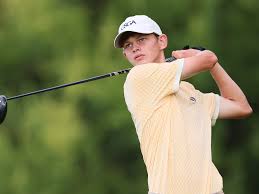
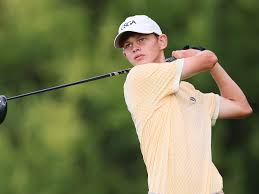
Hamilton Coleman, Photo: Golf Monthly
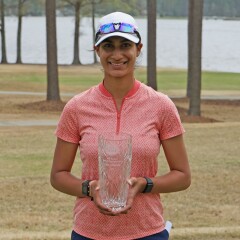
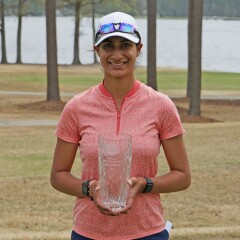
Vidhi Lakhawala
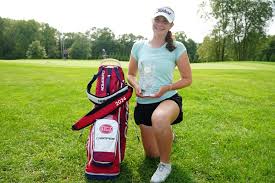
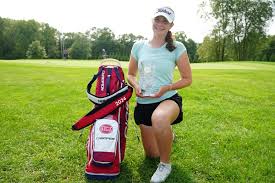
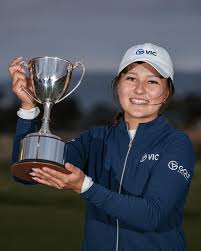
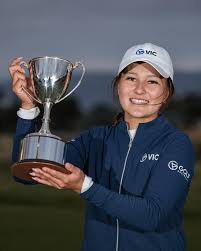
Zoe Cusack, Photos: AJGA
The majority of our top-10 athletes played multiple sports growing up, and many stopped playing them by high school to focus on their golf game. Future Wake Forest golfer Vidhi Lakhawala dabbled in tennis and swimming but stepped away from both at age 11 to further her golf game. Cusack, another tennis player, also participated in soccer until she was 11, and says ‘Around 8th grade, I started to focus more heavily on golf and started to enjoy it. At first, I never really looked forward to going to the golf course or asked my parents to take me. It was more of them telling me it was time to go to the golf course. Then, during COVID when golf was always an option of something to do, I began to put more time and effort into the game on my own. I started to create my own practice plans and would spend hours at the course. Since then, my love for the game has grown every day.’ Future Georgia Bulldog Coleman adds ‘I played baseball and basketball until about fifth grade but then I quit to focus fully on golf. Baseball messed up my golf swing and I wasn’t very good at basketball so I knew golf was my best option.’ Fellow future SEC golfer Mawhinney also tried the basketball route but realized in 8th grade that his height would be a disadvantage. Arkansas signee Lev Grinberg, who has been known on the international golf circuit from his early teens, balanced his travels with tennis and football until the age of thirteen. Other interesting sport choices were skiing (Bourgault), fencing (Le Goff), and table tennis (Couilleau).
‘Around 8th grade, I started to focus more heavily on golf and started to enjoy it. At first, I never really looked forward to going to the golf course or asked my parents to take me. It was more of them telling me it was time to go to the golf course. Then, during COVID when golf was always an option of something to do, I began to put more time and effort into the game on my own. I started to create my own practice plans and would spend hours at the course. Since then, my love for the game has grown every day.’ -Zoe Cusack, UVA signee
Each athlete had their own path to the elite junior level, some starting in local competition, and others participating in higher level tournaments early. We’ve discovered that there is no ‘perfect path’ to become a top recruit, and each golfer follows their own timeline and journey. Sutter, Lakhawala, Coleman, and Lee each started in US Kids local events, progressed to their states’ regional tours, and eventually landed in AJGA tournaments. Lakhawala finds that journey was helpful, saying ‘Because I started playing golf later than my peers, I was playing a lot of events to gain more experience. I built a lot of confidence through these local events, which helped me when I moved on to regional and national events.’ Lakhawala feels she was a late bloomer, starting 9-hole events at age 9, not beginning AJGA open events until fourteen. Several athletes mention the importance of learning how to win at a local level or a tournament in their own age group before advancing to the next level. Starting local and advancing to AJGA, Mawhinney says ‘To me this was the best way for me to do it because I developed but I also didn’t wreck my confidence and got some wins under my belt.’ Coleman agrees with him, stating ‘I think this path (local to regional to AJGA) gave me a very natural progression through each level where I started out towards the bottom and worked my way to be able to win at every level.’ Pepperdine signee Ayden Fynaut, a late bloomer and addition to our top-10 list, adds ‘I started more local and then worked my way up to the elite tournaments. I think it’s helped me out a lot just learning how to win and compete and then just using all my past experiences to help me move forward into these elite tournaments.
Le Goff played a progression of tournaments but also moved to high level amateur and international events quickly. He offers, ‘I started playing regionally, then nationally, then internationally. Every time I played in my age group, trying to win on different stages and Amateur events, trying to learn from these big events. In my opinion, I think it's the right way to progress step by step. First you're trying to win in your age group, then you compare yourself nationally and internationally to your age group. Once that is done, you get to a higher level by playing worldwide or in men's category, taking the most experience from it. Then in big moments you can rely on what you learned in the past. Amelia Harris benefitted from a national development system in Australia after moving to Melbourne. She says ‘In my second year in Melbourne, I was picked for the States high performance program, which led to me playing more national events at a higher level and one international event. Since being in that program, I have been able to represent Australia overseas and play at a high level here.'
Hugo Le Goff, photo: WAGR
Amelia Harris, photo: @golfaust
‘I work on wedges first distance control and trajectory, then go to the range and work on irons shot shaping then driver. Then I go spend most of my non-course time on the putting and chipping green, then play some holes. After playing holes I go back and work on whatever was weak while playing, then I go to the gym and run and workout. During the off season I may spend a little more time on range if I’m working on something specific on my swing.’ -Bailey Sutter
Mawhinney tries to mix things up with other sports, and his typical day starts with stretching at home, then ‘I get to the course around 9:30, putt for about an hour, hit balls for an hour and a half, then grab some lunch aMannd the find some buddies to play with. After that I’ll go play pickleball or basketball with some friends.’ While some athletes are home-schooled, golfers like Coleman have to plan practice around a full day of school, stating ‘If I have school, and during the winter with short days, I only have a couple hours to get good practice in. I like to play at least twice during the week and practice the other 2-3 days. Typically I’ll practice putting one day and then do swing work and short game the other day. I’m very organized with my practice, so I plan out everything I’m doing before I get there. On the weekends I try to play as much as I can and get more practice in with whatever time I have left.’
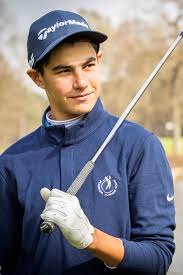
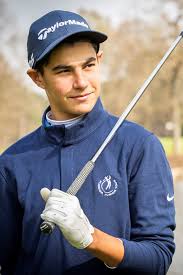
Lev Grinberg, photo: WAGR
Many of the elite players in the 2026 class were talented at a young age, but many of them note that there was a time when they realized they were good enough to play college golf at a high level. Grinberg, ay Euroean prospect at a young age, says ‘I realized that I was one of those kids who could have a big future when I made the cut at 14 years old on a DP world tour event. That was a very big step mentally for me, acknowledging that I am exceptional and I can compete with the big guys already. That week changed my mindset for the future.’ Couilleau, another European player, adds ‘For a few years I have played in collegiate fields, and I think I’m good enough to compete with them even if i’m a Little bit younger. I have won the Monroe this Summer and then finished 3rd at the World Championship and at this moment I realized that I will be able to play on the highest collegiate level.
Lakhawala, who didn’t start the big invitationals until later, says that the 2023 New Jersey State Girls’ Championship made her a believer in her talent. ‘The format included both stroke play and match play, and some of the top players in the state were competing in the event. Winning that event gave me a lot of confidence and assurance that I could compete at the college level, where a lot of tournaments are both stroke-play and match-play,’ she says. Coleman and Lee both found that success in AJGA events improved their belief in themselves, with Coleman saying ‘I wouldn’t say there was ever one moment in particular, but when I started to compete in AJGA events and get into contention I realized that I could compete at high levels.’ Cusack, on the other hand, notes that tournament play didn’t specifically make her realize her potential, but the recruitment process did. ‘When I first started emailing coaches after freshman year, I was not ranked very high and for most schools I wanted to play golf at, I didn't have the skills or scores for yet. I began having better results leading up to June 15th of my Sophomore year, which influenced the coaches that were interested in me. I had a very successful summer before my Junior year that completely changed the level of college golf I expected myself to play. Throughout that time period, the level of college golf I had the ability to play changed drastically,’ Cusack explains.
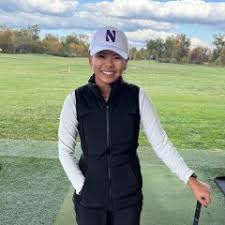
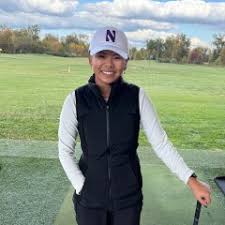
During the recruiting process for the class of 2026, there were many unknowns regarding the outcomes of litigation and hearings, the number of spots available on a team, and the amount of scholarship money available on many teams. We ask the recruits how the impending roster limits affected their recruiting process and how the situation affected their choice of future colleges. Since this group of recruits includes all elite, highly sought after athletes, it didn’t have an effect on them. Coleman did note that he immediately crossed schools with large rosters off of his list. Several athletes gave us some insight into their recruiting process and what influenced their final decision. Two recruits, Bourgault and Ayden Fynaut, ended up switching their verbal commitments after a strong uptrend in their game. Bourgault explains ‘My recruitment process was kind of in two parts. I ended up committing early to a University and fell in love with the school and the coaches from the very beginning. Then a year later, a month before national signing day, I realized that I wanted to explore other options because my game really improved. I had a lot of strong results and realized that I really wanted an environment with internal competition. When I visited Northwestern University, I just knew it was the place for me to continue to grow both athletically and academically.’ Fynaut, who was originally committed to Fresno State, says ‘I flipped my commit to Pepperdine, which was the first school I visited after decommitting. The reason I chose Pepperdine was because of the golf program and the location of the school. Having the privilege to play for coach Beard and seeing some of the players he has gotten to the PGA Tour is pretty amazing.’
Ann-Sophie Bourgault, phto: AJGA
Ayden Fynaut, photo: @jonescupinvitational
‘The main reason I chose Vanderbilt was because I love Coach Limbaugh and firmly believe that he can develop me into a PGA tour player and develop me as a person too.’' - Tyler Mawhinney
Coming from Australia, Harris did not have the opportunity to visit schools in the US before committing. ‘I did talk to quite a few coaches but I always knew I was going to pick South Carolina. Coach was one of the first coaches I saw at the start of 2024 at a tournament which made me have a connection to her easier than some others. I knew it was a very strong college and my best friend was also going there. I ended up doing my visit just before signing and I loved it so much,’ she says. Another foreigner, Le Goff, was able to visit three schools. He didn’t like to vibe at the first school he visited, and the second school wasn’t sure about the number of roster spots they would have available. He states ‘The thrid was perfect and did not have roster limit concerns, so I decided to consider the University of Virginia to be my future college.’ Grinberg took his time choosing a college and went on several visits. ‘I was very lucky to have had the opportunity to talk to many great schools like Texas Tech, FSU, Stanford and Clemson, but when I visited University of Arkansas I liked everything about it and felt like it was my place and where I needed to be in the future. From the practice facilities, coaches, to tournament schedule, Arkansas checked all the boxes for me,’ he says. For northerner Lakhawala, a school with a warm climate was important to her, stating ‘Wake Forest had always been a school at the top of my list, and was the school that I immediately fell in love with when I took my visit. The coaching staff and team culture stood out to me, and having the practice facilities and golf course right on campus was a huge bonus. Everything about the program aligned with what I was looking for both athletically and academically.’ Mawhinney, who took visits to Auburn, Florida, and Vanderbilt, was influenced by Coach Limbaugh’s reputation, adding ‘The main reason I chose Vanderbilt was because I love Coach Limbaugh and firmly believe that he can develop me into a PGA tour player and develop me as a person too.’
Cusack is very detailed in describing her recruiting experience, offering some solid advice to follow, ‘I created a list of colleges during the end of freshman year that included schools mostly in the Southeast. I consistently kept these coaches updated prior to June 15th and only received interest from about half of them when rules permitted. As I started to have better results in the early summer, more coaches started to reach out to me and I reached out to coaches through Instagram DM. Even if a coach doesn't reply, I found it very essential to keep reaching out to them through text or DM to make sure they knew I was interested. I took my first visit to UVA in mid -September and had an amazing experience. I then went on to visit Texas and Vanderbilt, then cancelled my other three visits. Ultimately I chose to commit and later sign to UVA because of the excellent academics, Coach Ria and Coach Annie, proximity to home, and the proximity from campus to the facility. Currently, I live 5 minutes from my golf course and wanted to experience that ease of travel in college as well. On my visit to UVA, I felt so welcomed by the team and coaches and saw myself thriving in Charlottesville. It is very clear that Coach Ria and Coach Annie believe in me and I know they truly support me.’ Coleman’s recruiting process was pretty simple, as he took one visit to Georgia which solidified his choice. ‘UGA was just perfect for me with the distance, the way they run their program, and the schedule of events they play. They have a very hands-off approach and let you practice with what you know works for you,’ he elaborates.
The path to become an elite junior golfer is not easy, and each athlete has a strong support system and people who they influenced them and shaped their game along the way. Each also has their reasons for looking up to certain professional golfers who they would like to emulate. Here’s what each recruit said, with parents the center of many statements.
Jude Lee: Two people who have most influenced and shaped my game in golf are my parents. My dad was a key part of deciding how I trained and what tournaments I played in, giving me rides to practice and helping train me. My mom has always been a source of constant encouragement. I really look up to Scottie Scheffler in the way he handles himself on the golf course and his openness about his faith. He is also one of the best the game has seen in years, which is a fun watch.
Bailey Sutter: My parents have been the biggest influence in my career. I look up to Tiger because of his killer instinct and Scottie because he puts God before it all, but I’d say he has that instinct too that just looks different. I look up to Xander for his composure.
Ann-Sophie Bourgault: Of course, my parents are my biggest motivators and supporters but I would say that my mental and performance coach, Patricia Meunier-Lebouc, has greatly impacted my golf game and journey. At first, I didn’t think I needed a mental coach but now 4 years later, I think she’s been the biggest part of my growth! She’s taught me to have full confidence and belief in myself and that success comes from within me. My swing coach, Jorge Parada, also brought a lot of value to my game. He has not just taught me the mechanics of my swing but also how to be independent and be able to manage the technical part of my game by myself. A pro golfer I look up to is Lydia Ko because I believe she embodies what hard work and discipline looks like. She’s been a pro for over 10 years and yet she’s still competing and on the top of leaderboards even after struggles and hardship. Not only is she an amazing golfer, she’s an amazing person. Every time I’ve met her, she’s always willing to give her time to meet fans.
Vidhi Lakhawala: One person who has influenced and helped shape my golf swing is my golf coach, John Piekarz, from when I first started playing golf. He always encouraged and motivated me to believe in myself and my abilities and always took time out of his day to watch my swing and give me feedback. There were many days when I would go to the golf range after school around 3PM, and we would practice and work together until it was dark. Those long sessions helped develop my game but also taught me the value of hard work, patience, and consistency, which are lessons that have stayed with me years later. The professional golfer I look up to is Nelly Korda. It is inspiring to see her continue to perform at the highest level and play so consistently. I have also been fortunate to play in the tournament she hosts, The Nelly Invitational, and be able to meet her and talk to her. Seeing how she supports and advocates for women’s golf while continuing to dominate on the golf course makes her someone I look up to.
Hugo Le Goff: My influence is my dad because he's the one who I saw every day, who believed in me, and who built my strengths I have today. My mom is my voice of wisdom and has helped me a lot with school. I look up to the only one Tiger Woods for his greatness, accomplishments .and the way he reinvented golf.
Zoe Cusack: Two people that have influenced and shaped my game in junior golf are my dad and my coach John Scott Rattan. My Dad is the person who initially introduced me to golf. Playing golf himself, he and I have a shared love for the game that has really strengthened our relationship and led me to enjoy the game even more. All of the contests we would do together after he got off from work caused me to stay a little longer at the course and have something to look forward to at the end of the day. My Dad is also always there for me after a bad round or a career round and is always the first one to give me a hug after the 18 holes are complete. The second person who has influenced my game is my coach, John Scott Rattan. John Scott and I have worked together for almost 7 years now, and words cannot describe how he has helped me. John Scott is always there to support, encourage, and teach me in so many different ways. He is someone I can always go to for advice in the middle of a tournament or practice session. John Scott has guided me through many different stages of junior golf and through the highs and lows. I am truly grateful for the support and guidance I have received from him throughout the years and know he will continue to play a huge positive role in my golf game and career. A professional golfer I look up to most is Nelly Korda because of her hard work and effort she is always putting into the game. Her worth ethic is something everyone should strive for.
Lev Grinberg: The two people that have inspired me off the course are Tiger Woods and Jon Rahm. I really love how Jon Rahm plays, his attitude, his way of playing the game, and his way of shot shaping. Tiger Woods is my golf idol, and I strive to be like him.
Tyler Mawhinney: My dad and my swing coach Chan Reeves have influenced me the most. They both helped me in my development by keeping the game simple and making sure my fundamentals and how I think on the golf course were sharp. I look up to Scottie Scheffler both on the course and off the course. His consistency is unbelievable and is something I strive for each and every day. He also has a strong faith in Christ and is bold in his faith and that isn’t something that is easy to do. He seems to do all the right things on and off the course.
Amelia Harris: I would have to say obviously my parents are the greatest influences in my career. They have supported me the whole way and pushed me when I needed it. I look up to all the Aussie girls, but I would have to say I look up to Karrie the most. She grew up in. a similar way like I did, in a small town with not much golf. To see the things she has done and the impact she has had, how could you not look up to her?
Hamilton Coleman: My dad and my coach Doug Spencer have helped shape my golf career. My dad got me into golf and taught me the fundamentals, and Doug has been able to take my game to higher levels and has taught me the small details that make up a great player. I look up a lot to Scottie Scheffler. Of course his golf game is incredible, but the way he carries himself and puts his family and faith first is what I admire most.
Oscar Couilleau: I give thanks to my coach Kenny Lesager. Over the past few years, he helped me a lot to get better and to build a better swing through the years.
Ayden Fynaut: The people that have influenced me have to be my parents and my coach. Having them with me on this journey with all the highs and lows and just learning and trying to get better has been great.
Contacts
general: admin@collegegolfcommits.com
graphic design: graphics@collegegolfcommits.com
Support the hard working group of junior & college golf fans who spend countless hours running this site & instagram account by scanning or clicking the Venmo QR code. Many thanks from the CGC staff!